Fascias & Soffits in Horsforth and around
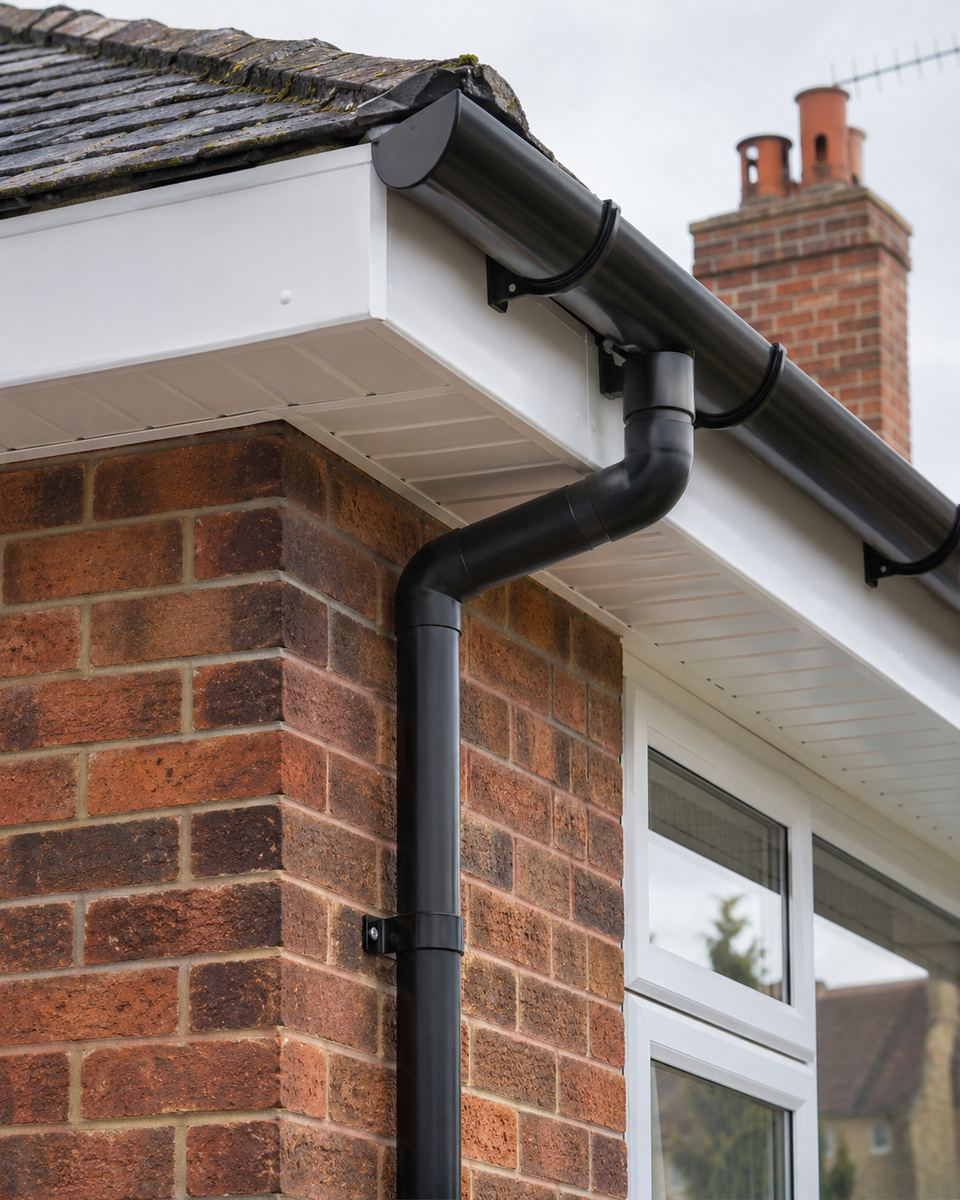
Fascias are the upright boards fixed to the ends of the rafters, carrying the gutter. Soffits are the flat boards underneath, closing the gap back to the wall. Bargeboards do the same job on the sloping edges of a gable. On Horsforth's inter-war semis and post-war houses they were usually painted timber, and many have since been replaced or capped in uPVC.
Timber roofline that has not been painted for a while lets water in at the joints and the ends. It softens, the paint flakes, and before long the gutter brackets will not hold. Capping rotten boards with plastic hides the problem but does not solve it; the timber behind keeps rotting. A proper renewal takes the old boards off, checks the rafter ends behind them and fixes new boards to sound timber.
The eaves are also where a roof takes in air. Modern soffits and fascia vents let the loft ventilate, which helps prevent condensation. And the bottom row of felt or membrane needs to drain into the gutter, not behind it, which is why we look at the roof edge as a whole.
Signs your fascias or soffits need work
- Paint peeling and wood showing through on the fascia
- Soft or crumbling timber when pressed
- Gutter brackets loose or pulling out
- Gaps in the soffit where birds or wasps get in
- Staining on the wall below the eaves
- uPVC boards that have warped, cracked or come loose
- Bargeboards on a gable that have split or dropped
- Felt at the eaves that has perished, letting water behind the gutter
Why roofline boards fail
Water at the joints
Timber boards take in water where they meet and at their ends. Without paint, rot starts at those points and spreads.
Overflowing gutters
A blocked or sagging gutter spills water back onto the fascia, soaking it repeatedly.
Perished eaves felt
On older roofs the felt at the eaves becomes brittle and breaks, so water runs behind the gutter and into the fascia and rafter ends.
Capping over rot
uPVC boards fitted over rotten timber hide decay that keeps going underneath until the fixings give way.
Wildlife
Gaps at the soffit let birds, bats and insects in. Bats are protected, so any work where they are present has to be planned with that in mind.
How fascias and soffits are renewed
1. Inspect
We check the boards, the rafter ends, the eaves felt and the gutters, and look for any signs of nesting birds or bats before planning the work.
2. Remove the old boards
Gutters are taken down, old fascias, soffits and any capping are removed, and the rafter ends are checked. Rotten ends are repaired.
3. Eaves protection
Where the felt at the eaves has perished, an eaves protection strip or new felt is fitted so water drains into the gutter.
4. Fit new boards
New uPVC or timber fascias and soffits are fixed to sound timber, with ventilation built in where the loft needs it.
5. Refit the gutters
Gutters are refitted with new brackets and set to fall to the outlets, with new downpipes where needed.
Worth knowing
Timber or uPVC
uPVC needs very little upkeep and is the usual choice. Painted timber can suit older or listed houses better and lasts well if painted regularly.
Bats and nesting birds
If there is any sign of bats, work has to wait for advice. Nesting birds should not be disturbed during the season. We check before we start.
Do it with the gutters
Renewing fascias means taking the gutters down anyway, so it is the natural time to replace tired guttering too.
Scaffold or tower
Roofline work on a two-storey house is usually done from a tower or a light scaffold for safety, and that is shown as its own line in the price.
Related roofing work
Guttering
Overflows, dripping joints and sagging runs sorted. Cast iron repaired or renewed, uPVC refitted to fall.
More on this →Roof Repairs
One weak point found and put right: slates, ridges, lead or flat roof, matched to what is already on the house.
More on this →Storm Damage
After a westerly gale: made weathertight first, then ridges, verges, lead and edges repaired properly.
More on this →Roof Replacement
Stripped, re-membraned, re-battened and relaid in slate or tile when repairs have stopped paying their way.
More on this →Where we do this
Horsforth first, then everywhere else in the Leeds district. Nearby area pages where this comes up a lot: Horsforth, Cookridge, Tinshill, Ireland Wood, Holt Park, Bramley, Yeadon, Guiseley. Anywhere else: put your town or postcode into the area finder.
Fascias & Soffits: questions people ask
- Only if the timber behind is sound. Capping rotten boards hides the problem and the fixings eventually fail. We check first and tell you which applies.
- Most lofts benefit from airflow at the eaves to keep condensation down. Vented soffits or fascia vents provide it, and we include them where the loft needs it.
- They have to come down for the work. If they are in good order they can go back up; if not, it makes sense to renew them at the same time.
- A typical semi takes one to two days, depending on how much rotten timber is found behind the boards and the weather.
- uPVC roofline comes in white, black, grey, brown and wood-effect finishes. We can match the windows or the neighbours.