Storm Damage in Horsforth and around
Storm damage on a roof is usually concentrated at the edges: ridge tiles lifted at the top, verges stripped at the gable, slates and tiles lifted along the exposed slope, lead flashings peeled back, and flat roof felt torn at the front edge. Trees and branches add their own damage, and gutters and downpipes can be pulled away.
After a big wind, phones get busy and roofs across the district need attention at once. We prioritise making roofs weathertight where water is getting in, and then come back to repair them properly. A temporary cover or a few refixed slates can stop rain getting in until full repairs are done, but they are not the end of the job.
We also check whether the storm has found a weakness that was already there. Ridges with tired mortar, slates held by rusted nails and flashings fixed with sealant are the first to go. If that is the case, we tell you, because the next gale will find the same weakness.
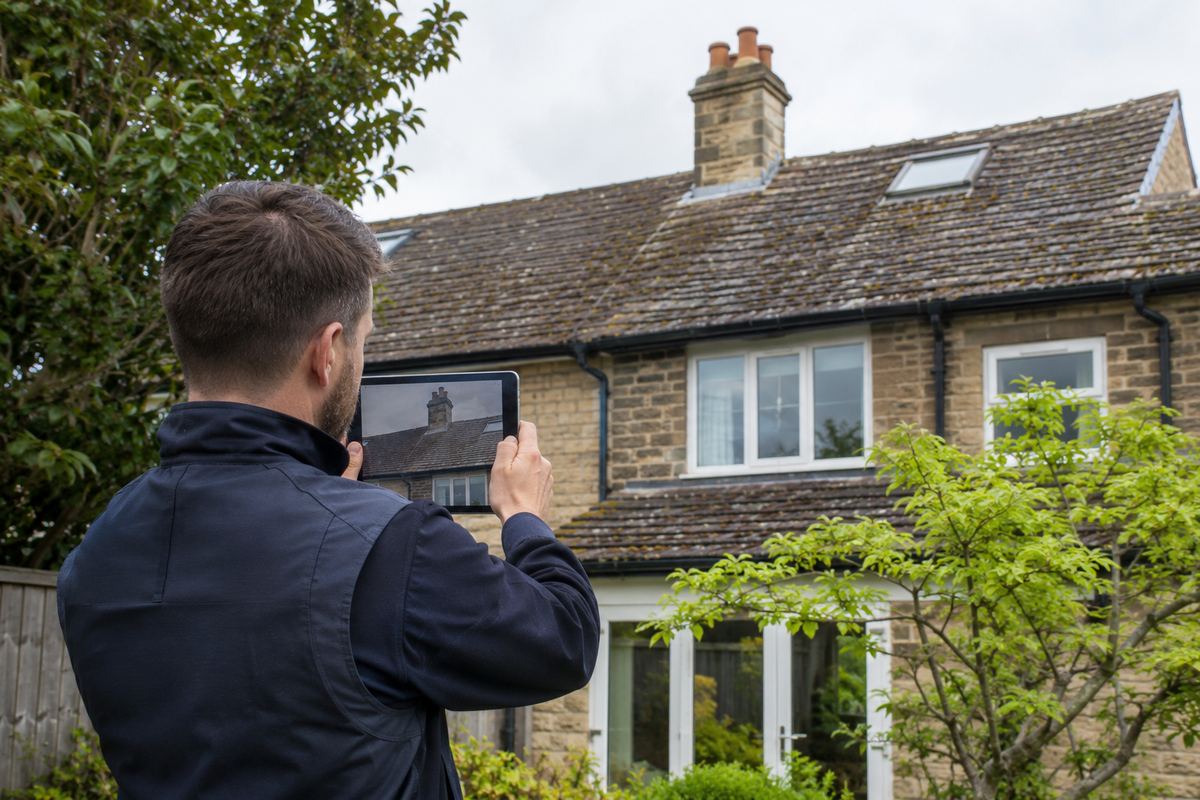
Signs of storm damage to look for
- Slates or tiles on the ground, drive or garage roof after a storm
- Ridge tiles missing or out of line
- Gaps at the gable where verge mortar or tiles have gone
- Lead flashing folded back or missing around the chimney
- Felt on a flat roof flapping or torn at the edge
- Gutters or downpipes hanging off
- Branches lying on the roof
- New damp patches on ceilings after the wind and rain
How storms damage roofs
Wind uplift
Wind passing over a roof creates suction on the leeward side and at the edges. Loose or poorly fixed slates, tiles and ridges are lifted off.
Driven rain
Rain blown sideways gets under slates, verges and flashings that keep out ordinary rain. Leaks that only show in storms are often caused this way.
Falling trees and branches
Mature trees are part of Horsforth's character, but in a gale branches can break slates, dent gutters and puncture flat roofs.
Existing weaknesses
Weak mortar, rusted fixings and poorly fixed lead are where storms start. Damage is often worst on roofs that were already tired.
Debris
Wind blows leaves, branches and loose items into gutters and valleys, which then overflow in the rain that follows.
What we do after a storm
1. Make safe
Anything loose that could fall is removed or secured, and the area below is kept clear.
2. Make weathertight
Missing slates and tiles are replaced or covered, flashings are refixed and torn flat roof edges are secured so rain stops getting in.
3. Assess the rest
We check the whole roof for damage you cannot see from the ground and for weaknesses that may fail next time.
4. Write it down
You get a written description of the damage and the repairs needed, with photos where we can take them, and a written price.
5. Repair properly
Ridges are rebedded or dry-fixed, verges renewed, lead replaced and flat roof edges repaired, so the roof is ready for the next storm.
Worth knowing
Stay off the roof
After a storm, please do not climb onto the roof or up a ladder to look. A photo from the ground or a window is enough to start with.
Photos for your records
Photos of the damage, inside and out, and a note of the date of the storm help if you need to make a claim on your policy.
Temporary is temporary
Tarpaulins and temporary repairs stop water for a while but can blow loose. Proper repairs should follow as soon as possible.
Check after every big wind
A quick look from the street after each storm, for anything out of line on the ridge, gables or chimney, catches small problems early.
Related roofing work
Roof Repairs
One weak point found and put right: slates, ridges, lead or flat roof, matched to what is already on the house.
More on this →Ridge, Verge & Valley
Ridge tiles rebedded or dry-fixed, gable verges renewed, valleys cleared and relined in lead or GRP.
More on this →Slate & Tile Repairs
Slipped slates refixed, cracked tiles swapped, nail sickness spotted early. Matching sizes and profiles sourced.
More on this →Chimney Repairs
Pointing, flaunching, pots, caps and new lead around the stack, or an unused stack taken down safely.
More on this →Where we do this
Horsforth first, then everywhere else in the Leeds district. Nearby area pages where this comes up a lot: Horsforth, Rawdon, Yeadon, Guiseley, Bramhope, Cookridge, Holt Park, Calverley. Anywhere else: put your town or postcode into the area finder.
Storm Damage: questions people ask
- Stay safe and stay off the roof. Keep people away from anything that could fall. Catch any water inside, take photos, and phone the office to arrange a look.
- Yes, where it can be done safely. Temporary covers keep rain out until a proper repair can be made, but they are not a long-term fix.
- Usually because of an existing weakness: older mortar on the ridge, rusted nails or a flashing that was only glued. Roofs of the same age can be in very different condition.
- We describe the damage and the repair in writing, with photos where possible. You can pass that on if you are claiming on your policy.
- Not always. A leak that only shows in strong wind from one direction may be a small gap under a verge or slate rather than storm damage. We check both.