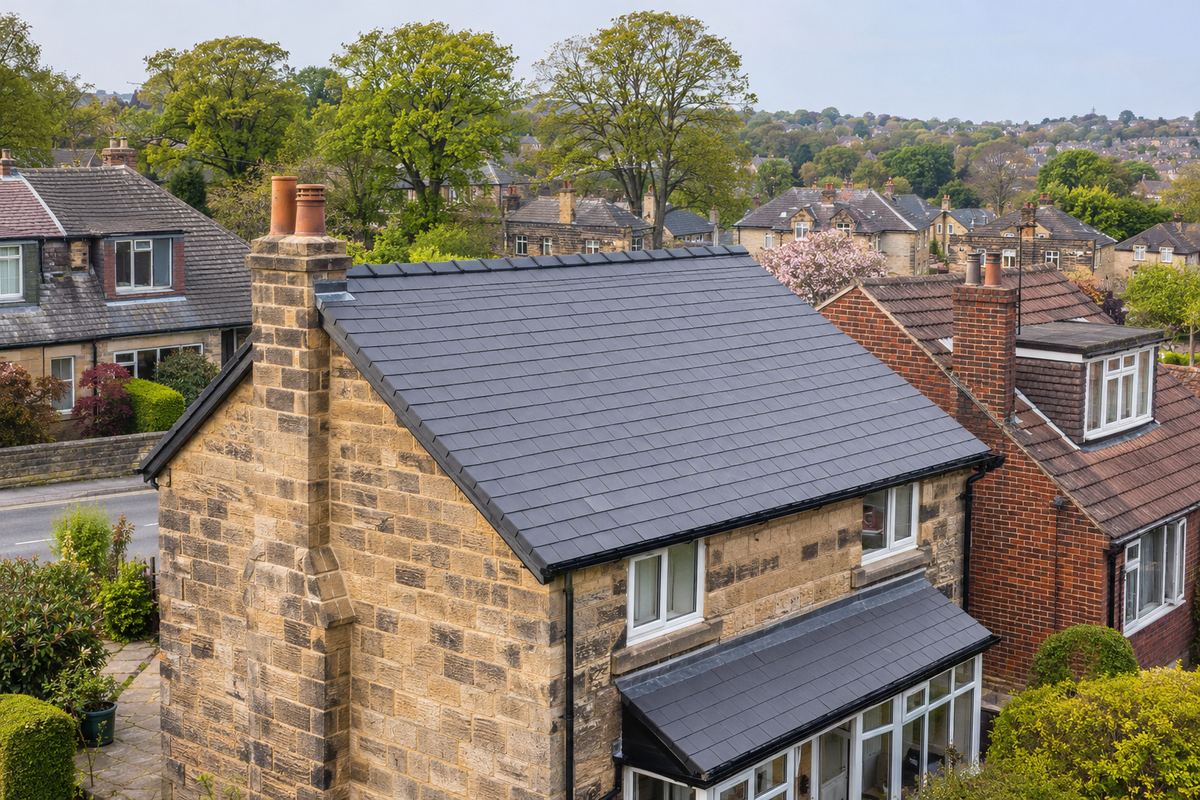
Slipped slates on the stone terraces, loose hips on the 1930s semis, valleys on the big Cragg Wood houses, tired felt on the kitchen roof. We find what is letting the water in, put it right, and write the price down before we start.
From a single slate to a full strip and relay, with the chimneys, lead, gutters and flat roofs that come with a Horsforth house. Each page explains the signs, the causes, how the work is done and what to ask.
Horsforth has every kind of roof Leeds ever built.
1
Stone and slate in the old centre
Town Street, Long Row and the terraces towards Woodside: Welsh slate on battens, often with no felt, iron nails rusting through and shared stacks every two houses.
2
Tiled hips round Hall Park
Inter-war semis with hipped clay or concrete tile roofs, bay tops of their own and hip mortar now close to a century old.
3
Valleys and lead in Cragg Wood
Big Victorian houses above the Aire with steep slate, several valleys, hidden gutters, tall stacks and plenty of trees dropping leaves into all of them.
4
Wind on the high streets
From Cragg Hill to Brownberrie, westerly gales push rain under verges, slates and flashings that stay dry in ordinary weather.
Illustrative image, not a photograph of one of our jobs.
A stain, a slate on the path, a drip in a storm. A photo from the street or a window helps us prepare.
2
We trace it
From inside and out, following the water back to where it gets in, and checking the rest of the roof while we are there.
3
The price, written down
The repair or replacement, the materials, the access and anything extra, each on its own line. You decide.
4
Fixed and shown
The work is done, gutters near it are cleared, and you are shown the finished job, with photos of anything out of sight.
Where we work
Horsforth first, then outwards.
Rawdon and Yeadon over the hill, Cookridge and Holt Park across the ring road, Kirkstall, Bramley and Calverley along the valley, and every other part of the Leeds district after that. Each of the 94 areas has its own page and map.
The business is named after the town and the work is centred on it: LS18 first, then Rawdon, Cookridge, Yeadon, Kirkstall and the rest of north-west Leeds, and the wider Leeds district beyond. There is no shop or yard to visit; every job is done at your property.
Most roofs that leak need one thing put right. If the slates, nails and battens are failing across whole slopes, replacing them costs less over time than patching. We show you what we find, with photos where it is out of sight, before recommending either.
Phone the office, send the form, or send a photo first. We then look at the roof and put the price in writing, with access and any extra work listed separately. Nothing starts until you agree it.
Yes. Kitchen extensions, garages, dormers and bays are covered in EPDM rubber, GRP fibreglass or reinforced felt, and we deal with the junction between the flat roof and the slope above it, which is where many leaks actually start.
Catch it in a bucket, move valuables and electrics away, and keep clear of any ceiling that is bulging. Stay off the roof and ladders. Then phone the office or send a photo through the photo check.
Roof playing up in Horsforth?
Tell us what you have noticed. We find the cause first and put the price in writing before any work starts.