Chimney Repairs in Horsforth and around
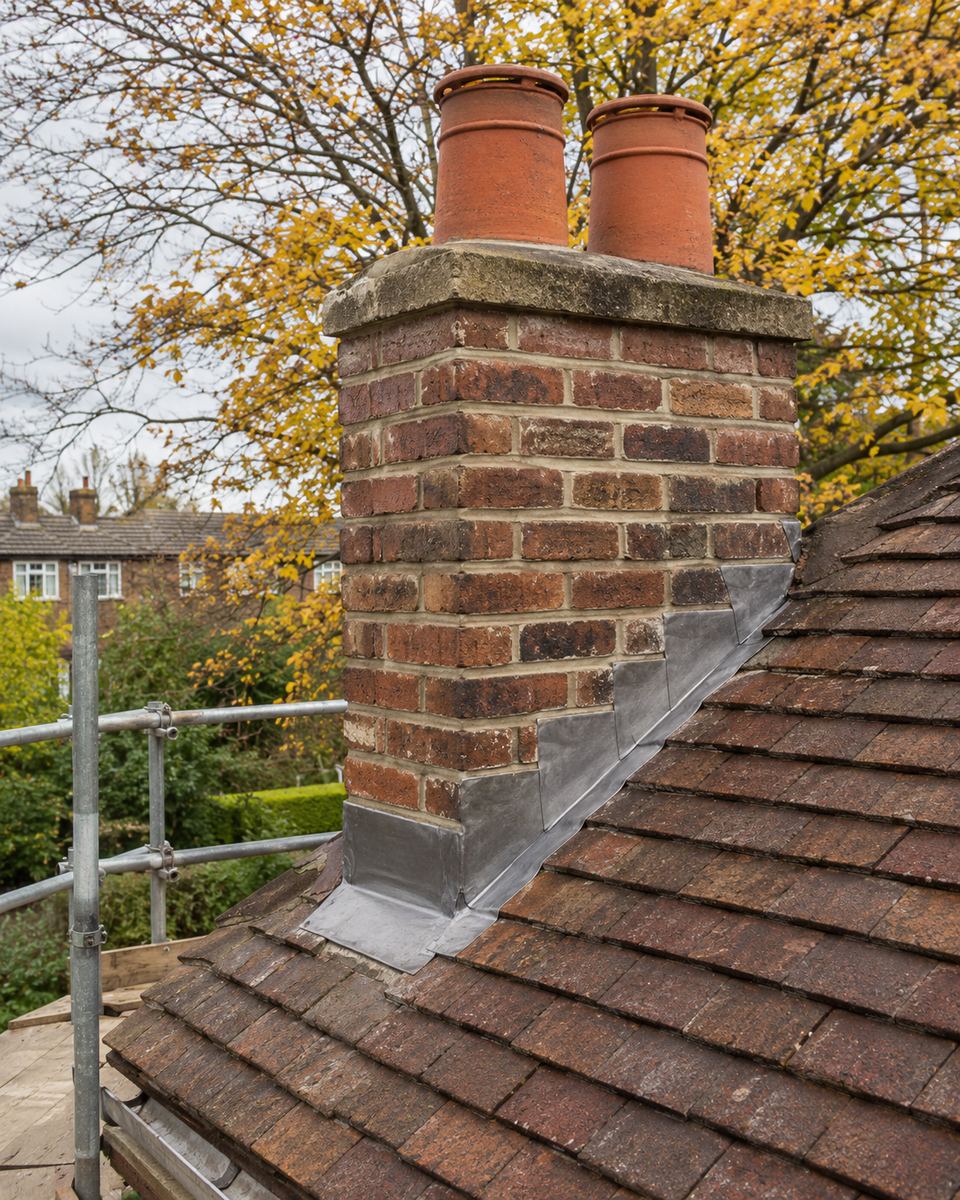
A chimney is part brickwork or stonework, part roofing. The stack itself has to stay sound and well pointed; the top has to shed water through a mortar flaunching round the pots; and where the stack goes through the slates, lead flashings and soakers keep water out of the roof. A problem in any one of those shows up as damp on the chimney breast, staining in the loft or a stain on the bedroom ceiling next to the stack.
In Horsforth you see every kind: shared stacks on the stone terraces around Long Row and the streets off Town Street, tall brick stacks on the inter-war semis, big stone stacks on the Victorian houses in Cragg Wood and along the Rawdon side, and small single-flue stacks on 1950s houses. Many no longer have a fire below them, but they still need maintaining or properly capping.
We look at the whole stack, not just the part that is leaking, and tell you its condition. Sometimes that means a new flashing and some pointing. Sometimes a stack that is leaning or badly eroded is better taken down to below the roof line, if it is no longer used and the building and neighbours allow it.
Signs a chimney needs attention
- Damp, staining or peeling paint on a chimney breast upstairs
- Mortar missing from the joints of the stack, seen from the street
- Cracked or missing flaunching round the pots at the top
- Lead flashing lifted, split or pulled out of the joint
- A pot that is cracked, leaning or loose
- Bricks or stone faces flaking or crumbling
- A stack that leans when you look along the roof line
- Bits of mortar or brick in the gutter or on the slates below
What goes wrong with chimneys
Weather on all four sides
A stack has no shelter. Rain, frost and wind work on its joints and faces constantly, and the top courses usually go first.
Flashing failure
Lead that has been fixed with sealant instead of being turned into a joint, or old lead that has split with age, lets water run down inside the roof.
Cracked flaunching
The sloping mortar bed round the pots cracks with frost. Water then soaks down into the stack and comes out as damp on the inside.
Sulphate attack
On stacks used for coal fires over many decades, chemicals from the smoke can attack the mortar from the inside, making the stack swell and lean.
Open, unused flues
A chimney with no fire and an open pot lets rain straight down the flue. Capping it while keeping some ventilation stops damp in the breast.
How chimney repairs are carried out
1. Survey the stack
We check pointing, faces, pots, flaunching and lead, and look at the chimney breast in the loft if it can be reached. You get a written description of what we found.
2. Arrange safe access
Most chimney work needs a scaffold or a chimney scaffold that sits on the roof. The access is priced as its own line and we explain what it involves.
3. Repoint and repair
Failed joints are raked out and repointed in a mortar that suits the brick or stone. Badly damaged bricks or stones can be cut out and replaced.
4. Renew lead and flaunching
New lead step flashings, a front apron and a back gutter are cut, dressed and fixed into the joints. The flaunching is renewed so water runs off the top.
5. Pots, caps and cowls
Cracked pots are replaced. Unused flues are capped with a ventilated cap. Where a fire is still used, any cowl fitted must suit the appliance below.
Worth knowing
Taking a stack down
If a chimney is no longer used and is in poor condition, removing it to below the roof line and slating over can be the long-term fix. A shared stack or one in a conservation area may need agreement or permission first, which we point out.
Party wall stacks
On terraces and semis, one stack often serves both houses. Work on it may affect your neighbour, so it helps to talk to them before the work is booked.
Keep some ventilation
A capped flue still needs a little airflow, or damp builds up inside the breast. Ventilated caps at the top and a vent in the room below are the usual answer.
Lime or cement?
Older stone stacks were built with lime mortar. Repointing them in hard cement can trap water and damage the stone, so we use a mix that suits the stack.
Related roofing work
Lead Flashing
Aprons, step flashings, soakers and back gutters cut into the joint and dressed by hand, not stuck on.
More on this →Leaking Roofs
Water runs before it drips. We follow it back from the stain to where it really gets in, then fix that.
More on this →Roof Repairs
One weak point found and put right: slates, ridges, lead or flat roof, matched to what is already on the house.
More on this →Storm Damage
After a westerly gale: made weathertight first, then ridges, verges, lead and edges repaired properly.
More on this →Where we do this
Horsforth first, then everywhere else in the Leeds district. Nearby area pages where this comes up a lot: Horsforth, Rawdon, Calverley, Farsley, Headingley, Kirkstall, Pudsey, Bramley. Anywhere else: put your town or postcode into the area finder.
Chimney Repairs: questions people ask
- Damp on a chimney breast in dry weather is often salts left in the plaster by years of coal fires. They draw moisture from the air. A roof leak is more likely if the damp grows after rain. We can help work out which it is.
- Usually, yes. Chimney work needs a stable platform around the stack, which means a full scaffold or a chimney scaffold that sits on the roof. Ladders alone are not safe for it.
- Yes. We fit a ventilated cap or a capped pot so rain cannot get in but air can still move through the flue. A vent in the chimney breast below keeps it dry.
- The stack is usually shared property, so we suggest you speak to them first. Work on your side may need some access on theirs, and they may want their side done at the same time while the scaffold is up.
- It can be. A lean caused by sulphate attack or failed mortar can get worse, and a stack that falls is a serious hazard. If you notice a lean, keep people away from below it and phone the office.